
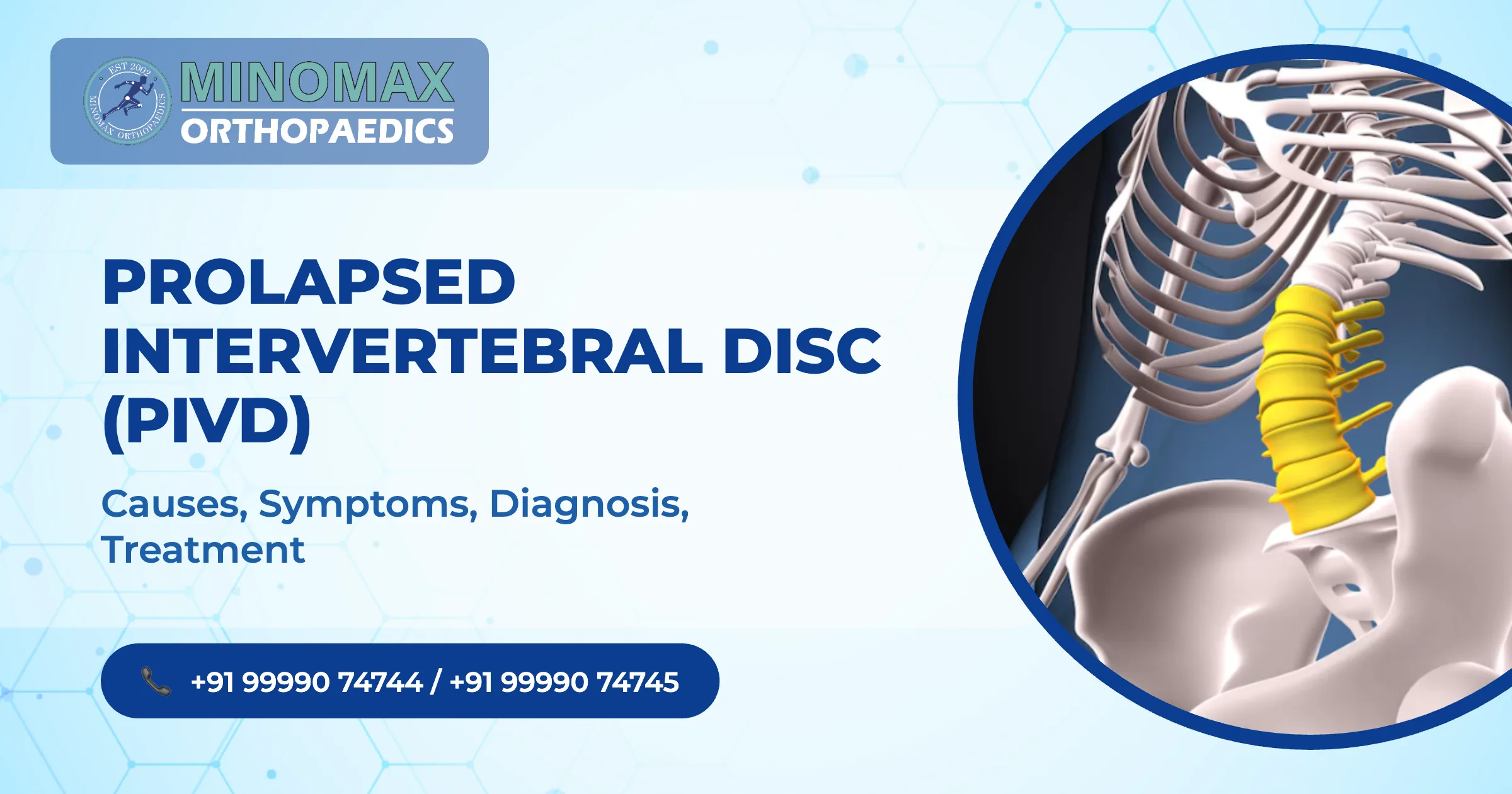
The condition known as “Prolapsed Intervertebral Disc” (PIVD) or herniated disc affects the spine and frequently results in back or neck pain. The tissue that lies between neighboring vertebrae and is shaped like a circle is called the intervertebral disc. The disc provides stability by acting as a cushion between two vertebrae. In severe cases, advanced options such as endoscopic spine surgery may be considered.
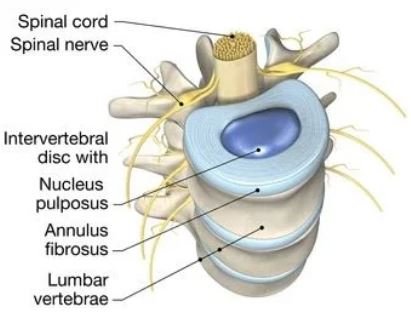
The intervertebral disc is made up of a soft centre called the nucleus pulposus and a thick, fibrous outer layer called the annulus fibrosus. The endplate is the interface that joins the disc to the vertebrae, supported by ligaments that guide vertebral development. During adolescence, the endplate is thick and gradually thins with age.
The annulus fibrosus is strong and flexible due to its concentric layers of thick fibres. Its gel-like nucleus pulposus allows for cushioning and absorbs pressure. The innermost layer of the annulus is supplied by the sinuvertebral nerve, originating from the dorsal root ganglion.
Causes of PIVD
- Age-related degeneration of the intervertebral disc is the most frequent cause of PIVD.
- Injuries, trauma, and incorrect lifting techniques can also lead to disc herniation.
- Genetics: Some individuals may be genetically predisposed to disc degeneration, affecting the resilience and strength of intervertebral discs.
Symptoms of PIVD
- Location-Specific Pain: Pain is often localized to the affected spine region, e.g., lower back pain in lumbar disc herniation.
- Radiating Pain: Pain may radiate to the arms, legs, or buttocks along the affected nerve pathway.
- Numbness and Weakness: Compression of nerves can cause tingling, numbness, or weakness in the limbs.
Diagnosis of PIVD
A physician will evaluate the patient’s symptoms and medical history, including the onset and triggers of pain. A thorough physical examination is conducted to assess motor and sensory function.
- Clinical Examination: Physical evaluation to assess neurological function and symptoms.
- Imaging: MRI scans are commonly performed to visualize the spine and pinpoint disc herniation.
Treatment of PIVD
- Conservative Measures: Many cases respond to rest, medication, and physical therapy without the need for surgery.
- Medication: Muscle relaxants, anti-inflammatory drugs, and pain relievers.
- Physical Therapy: Exercises and stretches to strengthen the spine and improve flexibility.
- Corticosteroid Injections: Epidural injections to reduce inflammation.
- Surgery: Discectomy or microdiscectomy may be necessary in severe cases where conservative treatment fails. Minimally invasive spine surgery, endoscopic spine surgery, or robotic-assisted spine surgery can offer faster recovery and greater precision.
Recovery and Lifestyle Modifications
- Rehabilitation: Physical therapy is essential to restore function and prevent further problems.
- Lifestyle Modifications: Correct body mechanics, regular exercise, and maintaining a healthy weight help prevent recurrence.
Conclusion
Prolapsed intervertebral disc (PIVD) is a common spinal condition that can cause varying levels of discomfort and disability. Early diagnosis and proper management, whether conservative or surgical, can significantly improve quality of life. Those experiencing symptoms should consult medical professionals for individualized advice and treatment.