


What is Leg Length Discrepancy?
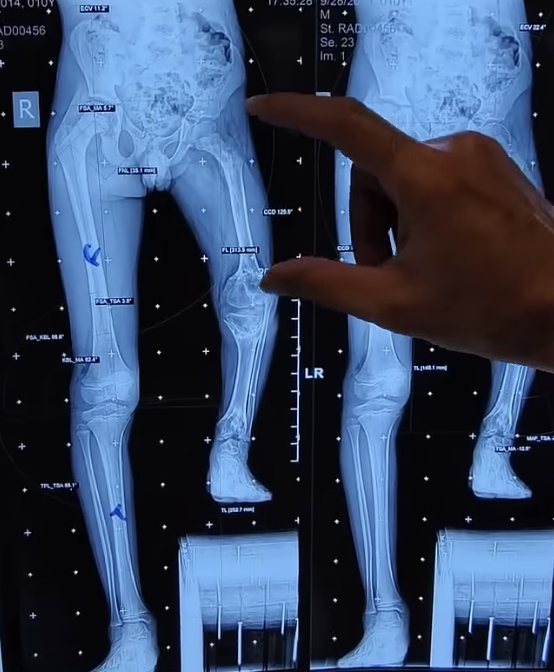
Leg length discrepancy, also known as LLD, refers to a condition in which one leg is shorter than the other. According to scientists, approximately 40-70% of the population has this condition, but most people do not even notice it. It is only when there is a significant difference between the legs that the condition begins to affect posture and an individual’s ability to walk, causing strain on muscles and hip joints and altering the spine’s shape. Consequently, one leg becomes shorter, one leg becomes longer, and the pelvis becomes tilted.
Leg length discrepancy has two types:
- Structural Discrepancy: When a bone in one leg or arm becomes shorter than the same bone in the other limb.
- Functional Discrepancy: When bone lengths are equal in legs or arms, but there is low joint mobility in the knee, hip, shoulder, elbow, or other joints. This condition affects the symmetry in the limbs.
What are the Causes of Leg Length Discrepancy?
The background of the leg length difference is complex. Both genetic and acquired factors come into play. The following factors may lead to LLD:
- Some cases of slight functional leg length discrepancies are not caused by asymmetrical bone growth, but by asymmetrical loading of the legs.
- Leg length discrepancy may be caused by the misalignment of the spine, as in the case of scoliosis.
- Congenital malformation of the hip joint is also associated with problems with the position, causing a difference in leg length in an individual.
- Anatomical leg length differences are caused by actually elongated or shortened sections of the skeleton. In some cases, differences in the length of the leg bones may already be detected during growth.
- Inflammation of the bone marrow due to infections is another cause of differences in leg length.
- Other causes include surgeries, including a hip joint replacement, muscular shortening, and laterally differentiated length growth after bone fractures.
What are the Symptoms of Leg Length Discrepancy?
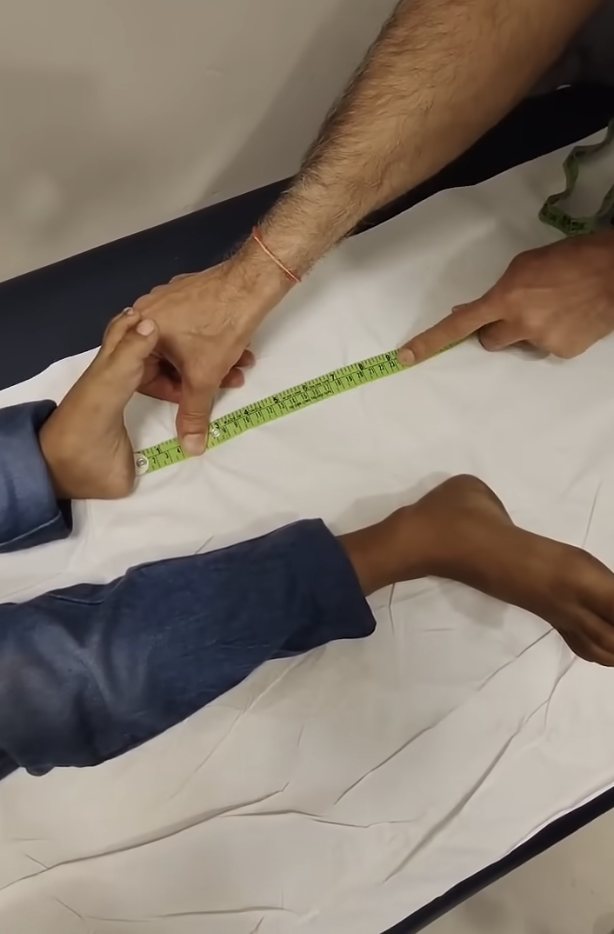
As this condition may occur in any age group, the symptoms of leg length discrepancy may vary from person to person. Common signs include the following:
- One leg or arm is visibly shorter than the other
- Problems with the posture, including tilting of the shoulder
- Problems with walking, including limping or toe-walking
- Chronically hyperextended knee on the shorter side and flexed knee on the long side
- Pain in the knee, hip, back, or ankle.
How is Leg Length Discrepancy Diagnosed?
When you visit a doctor upon experiencing the above-listed symptoms, they will look at your complete medical history. They will also carry out a physical examination and measure your limbs to calculate the difference in length.
You may be asked to walk, and the doctor will check your stride. They will use other means and media to physically examine the condition. Besides a physical evaluation, you may be asked to opt for a scan, such as an X-ray and other imaging tests, for a more precise measurement of the discrepancy.
How is Leg Length Discrepancy Treated?
After the diagnosis of leg length discrepancy has been confirmed, the doctor lays out a suitable treatment plan, depending on the severity of your condition. The first line of treatment includes conservative options. If they fail to show improvement, the doctor suggests surgical intervention.
Conservative Treatment
Various non-surgical or conservative treatment options may be used to treat leg length discrepancies. These options may help improve function in mild cases.
- A shoe lift inside the shorter leg helps level out the difference between leg lengths. This lift may as well help you walk and run with ease and reduce back pain.
- The doctor will suggest you opt for physical therapy. A physiotherapist will work with you and design a plan including special exercises and stretches to help reduce pain and increase the overall function of the leg.
- Occupational therapy may also be suggested, especially in the case of young patients. This therapy focuses on developing their fine motor skills.
- The doctor may suggest using adaptive devices to help with your everyday activities.
- Prosthetics designed to fit over a short limb may also be used as a part of treatment for leg length discrepancy.
Surgical Treatment
Surgical treatment for leg length discrepancy varies, depending on age and severity of the condition. In children and young patients, this condition is treated by epiphysiodesis. Under this procedure, the growth plate of the longer leg is manipulated in such a manner that further growth is stopped, making both legs equal in length.
In adults, the surgeon may use either acute or chronic surgery — both delivered under limb deformity correction.
- Acute Leg Length Correction: Under this procedure, the entire difference between the leg lengths is corrected in a single surgery. The bone is fixed in the desired position with the help of nails, plates, and screws.
- Chronic Leg Length Correction: This procedure is a more gradual process and is performed over a longer period of time. The surgeon gradually lengthens or shortens the bone with the help of special devices, such as fixators or lengthening intramedullary nails — see limb lengthening surgery. These devices are adjusted continuously. Another procedure called the Ilizarov procedure, or callus distraction, may be used for moderate differences in length.
Exercise for the Prevention of Leg Length Discrepancy
To prevent leg length discrepancy, it is vital to have strong core muscles and good posture. You can achieve it in particular by strengthening your abdominal and back muscles. Preventive exercises, such as strengthening exercises and targeted training of specific muscle groups, compensate for muscular imbalances.
Work with your physiotherapist to create a suitable exercise plan. They will first determine all the muscle imbalances present in your body and create a treatment plan including stretching exercises to target the muscles.
For expert evaluation and treatment of leg length discrepancy, consult Dr. Ashwani Maichand.
Patient Stories and Videos